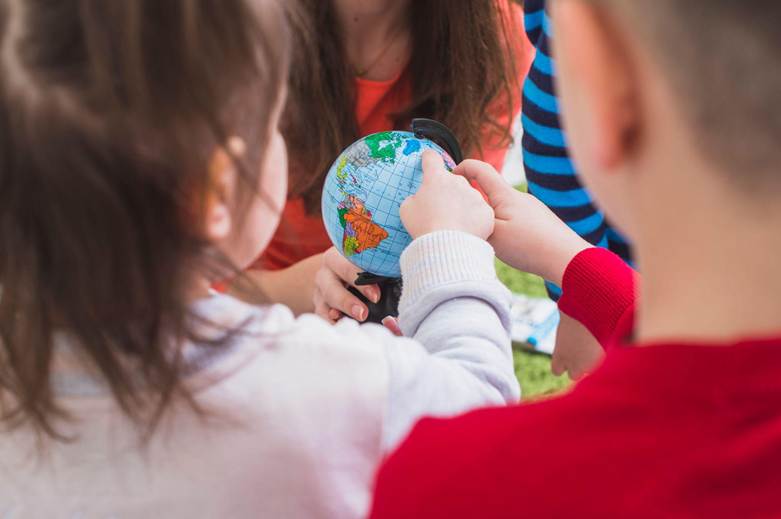
Children learn more from one another than adults sometimes realize. Danny Swersky emphasizes the importance of giving children opportunities to navigate social situations independently, where they can negotiate rules, resolve disagreements, make collective decisions, and experience the consequences of their choices. These interactions are more than ordinary moments of childhood play; they are informal opportunities to practice the skills required for collaboration, leadership, communication, and community life.
When adults organize every activity, settle every disagreement, and establish every rule, children may have fewer opportunities to develop those abilities on their own. Peer-directed experiences create a different environment. Children must determine how a group functions, respond to competing perspectives, and find solutions that allow everyone to participate. In that sense, independent play can serve as a small-scale laboratory for social development.
What Is Peer Culture?
Peer culture refers to the informal systems children create when interacting with one another.
These systems can include:
- Rules that children establish for games
- Shared expectations about behavior
- Informal leadership roles
- Ways of resolving disagreements
- Traditions and recurring activities
- Methods for including or excluding participants
Unlike adult-directed environments, these systems are often fluid. Rules can change because the children involved decide that they should change. A disagreement may require negotiation rather than an adult ruling. A child who wants to join a game may need to figure out how to become part of the group.
These experiences teach children that social environments are not simply something imposed upon them. They can participate in shaping them.
Why Negotiation Matters
Consider a simple disagreement during a game.
Two children want different rules. There is no adult immediately available to determine which interpretation is correct. The children have several choices: argue, abandon the activity, compromise, or develop a new rule that satisfies both sides.
The outcome matters, but the process may matter even more.
Through repeated experiences like these, children practice:
- Listening to opposing viewpoints
- Explaining their own reasoning
- Recognizing when compromise is necessary
- Communicating frustration
- Adjusting expectations
- Finding solutions collectively
These are foundational social skills, yet they cannot always be developed effectively through instruction alone.
Children Need Opportunities to Experience Consequences
Adult intervention often comes from a positive intention: preventing conflict, frustration, disappointment, or failure.
However, removing every difficult experience can also remove opportunities for learning. Peer-directed environments allow children to experience manageable consequences.
If a proposed game rule is unpopular, the group may reject it. If someone dominates the activity, others may stop participating. If a disagreement is handled poorly, the activity may break down.
These outcomes provide immediate feedback.
Children can then adjust their behavior and try again.
This creates a natural cycle of experimentation, reflection, and adaptation.
Informal Leadership Begins in Small Groups
Leadership development does not necessarily begin with a formal position.
Children can experience leadership when they:
- Suggest an activity
- Organize a game
- Explain rules
- Encourage participation
- Help resolve disagreements
- Recognize another child’s idea
- Adapt a plan when circumstances change
Importantly, peer environments also demonstrate that leadership is not synonymous with control.
A child who constantly dictates the rules may eventually discover that others stop participating. Another child may become influential because they listen, include others, and help the group reach agreement.
These experiences introduce children to an important distinction between authority and leadership.
Inclusion Becomes a Real-Time Skill
Peer culture also creates opportunities to practice inclusion.
Joining a group is not always straightforward. Children may need to figure out how to invite someone into an activity, modify a game so another person can participate, or respond when someone feels left out.
Adults can certainly teach the language of inclusion, but peer experiences allow children to practice it in real situations.
This distinction is important.
Knowing that inclusion matters is different from knowing how to create an inclusive social environment.
The latter develops through experience.
Conflict Is Not Always a Problem to Eliminate
Conflict naturally occurs whenever people with different preferences interact.
The goal of healthy development is therefore not necessarily to eliminate conflict but to help children develop the capacity to navigate it.
Unstructured peer interactions can expose children to relatively low-stakes disagreements that require them to practice:
- Perspective-taking
- Emotional regulation
- Communication
- Compromise
- Repairing relationships
A child who learns to recover after a disagreement gains something more valuable than simply avoiding one.
They learn that relationships can withstand disagreement and that problems can sometimes be repaired.
Adults Still Have an Important Role
Supporting peer culture does not mean adults should disappear.
There are situations where intervention is necessary, particularly when safety is at risk or when a child cannot resolve a serious problem independently.
The distinction is between protecting children when necessary and managing every aspect of their social experience. Adults can create conditions in which children have room to work things out while remaining available when genuine support is needed.
This approach requires judgment.
Sometimes the most constructive response is direct assistance. At other times, allowing children a little more time to negotiate may provide a valuable developmental opportunity.
Designing Opportunities for Peer Interaction
If children are expected to develop social independence, they need environments where meaningful interaction can actually occur.
That may involve creating opportunities for children to:
- Spend time together without a predetermined activity
- Make decisions about how to use shared spaces
- Organize their own games
- Interact across different ages
- Explore without constant adult direction
- Return to familiar play environments regularly
The objective is not to create perfectly controlled social experiences.
It is to provide enough freedom for children to develop their own.
From Childhood Play to Community Life
The skills practiced during peer-directed experiences extend far beyond childhood.
Adults regularly encounter situations that require negotiation, collaboration, compromise, and informal leadership. Communities, workplaces, schools, and families all depend upon people who can navigate differences without expecting someone else to resolve every disagreement.
Children begin practicing these capabilities long before they enter professional or civic environments.
A playground disagreement may seem insignificant in isolation, but repeated experiences of solving small social problems can contribute to a broader sense of agency.
Rethinking What Children Learn When Adults Step Back
Independent play is often discussed in terms of creativity, physical activity, or entertainment. Its social dimension deserves equal attention.
When children have opportunities to govern aspects of their own interactions, they practice the mechanics of living with other people. They negotiate, disagree, compromise, organize, lead, follow, include, and repair.
These are not secondary benefits.
They are fundamental capabilities for participating in communities.
The challenge for parents, educators, and communities is therefore not simply to give children more time to play. It is to recognize when stepping back can create valuable opportunities for children to practice governing their own small social worlds.
Conclusion
Peer culture gives children something adult-directed environments cannot fully replicate: the opportunity to experience social decision-making firsthand. When children have appropriate freedom to organize activities, negotiate disagreements, establish shared expectations, and solve problems together, play becomes a practical setting for developing agency and collaboration. Creating more opportunities for these experiences can help children build the social confidence and problem-solving abilities they will eventually carry into schools, workplaces, relationships, and communities.